
Nurturing our students’ well-being is the cornerstone of all we do. Students need to feel safe and happy coming to school in order to thrive and reach their full potential. All pupils have an allocated tutor who they see daily, as well as a Head of Year for their year group who is responsible for their pastoral care. We also have a team of Well-being Coordinators whose role is specifically to support the wellbeing of the pupils, in liaison with their families where needed.
Whole School Approach to Well-being
We have an established and effective whole school approach to mental health and emotional well-being. This is essential in maintaining a supportive environment where students and staff feel safe, valued, and understood. Our approach ensures early identification of issues; promotes emotional health across all areas of school life; involves the entire school community - including parents and external services - in fostering a culture of openness and support; and enhances both student outcomes, both academic and in terms of developing ‘the whole child’. Some of the features which make up our approach are explained below:
Well-being Coordinators
Our Well-being Coordinators work closely with students to identify social and emotional barriers to learning. They provide regular, bespoke support as well as assessing need and making further referrals where appropriate. Students can refer themselves, or teachers can make referrals for initial assessment where they perceive an issue.
Whole School Well-being Survey
Twice a year, we conduct a comprehensive whole school well-being survey. This is aimed at identifying longer term problems that students may be dealing with in school, as well as trends among groups of students. Identified issues are dealt with firstly by our Well-being Coordinators, with further support or referrals being put in place where appropriate.
Responsive Provision
The content of assemblies and PSE lessons adapts flexibly in response to current issues, directly addressing predominant well-being needs that have been flagged by students or identified by staff.
The Baxter Project (dog therapy)
We have worked alongside the Baxter Project since 2020 when, in the midst of lockdown, we engaged them to ensure our most vulnerable learners had access to targeted well-being provision, mindful that students' existing mental health issues would likely be exacerbated by the pandemic. Since then, the Baxter Project has become an incredibly effective part of our wellbeing approach, as well as an integral part of our school community. Our first visitors, Roo and her owner Sam, proved so successful in engaging even some of our most reluctant pupils that we have now taken on a second therapist, Zarreen, and her dog, Jake. We now have a Baxter therapist on site five days a week. The Baxter Project taps into the special bond between animal and child to create important and valuable relationships, and a safe and effective context for therapy. Students look forward eagerly to their sessions and the wider school community enjoy seeing the dogs around the school. You can find out more about the project here.
Cognitive Behavioural Therapy
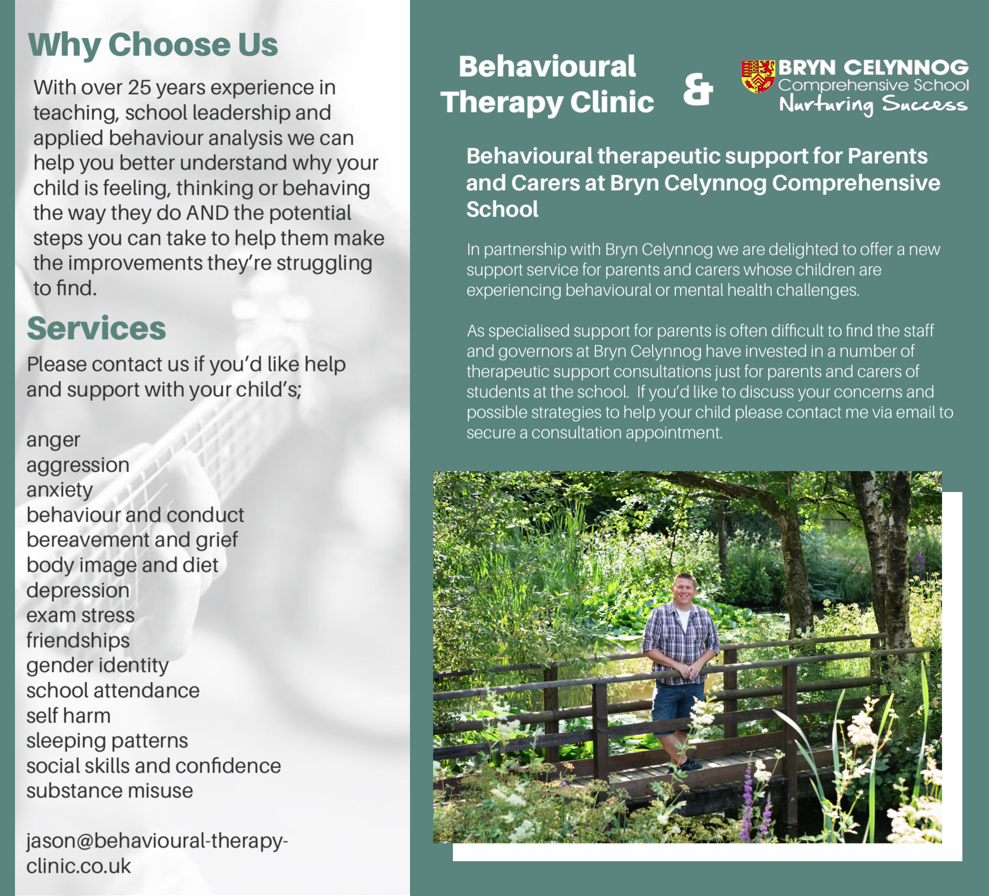
In 2021 we engaged Jason Clark, of the Behaviour Therapy Clinic, to work with students experiencing emotional and/or behavioural challenges. Jason is on site two days a week and he helps students to understand why they are thinking, feeling or behaving in certain ways and gives them strategies and tools to apply in order to overcome the challenges they are facing. Student feedback has been incredibly positive and we have had a number of self referrals based on word of mouth among students. You can learn more about Jason and the Behaviour Therapy Clinic here.
Support for Parents and Carers
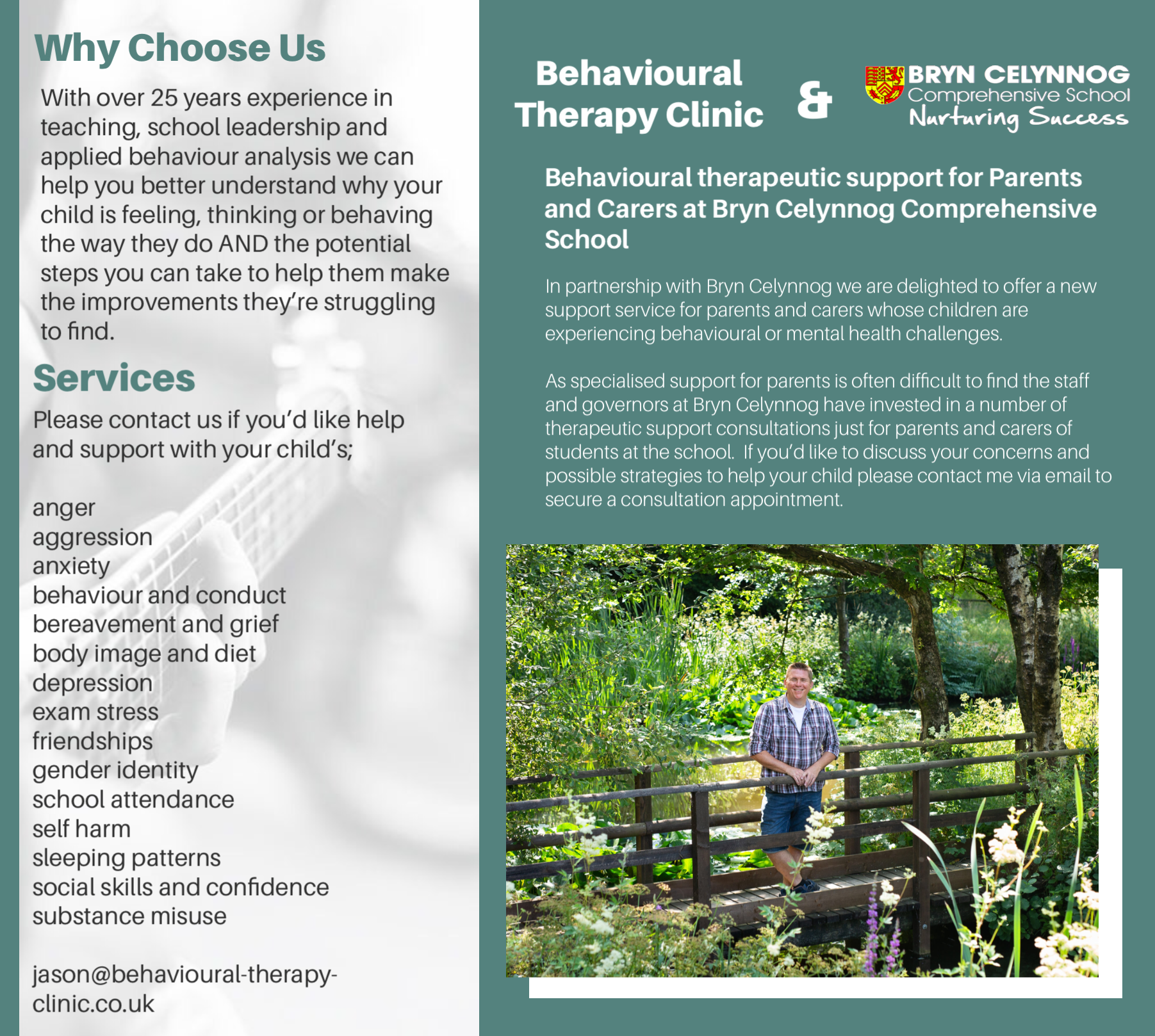
We have extended our well-being provision to offer support to parents and carers whose children are experiencing behavioural or mental health challenges. Parents are able to contact Jason Clark directly to discuss their concerns and, if appropriate, arrange a programme of support funded by Bryn Celynnog. You can find more information here.
CAMHS Shine Project
We work in partnership with a dedicated CAMHS worker to ensure we are supporting our students' mental health and emotional well-being in the most effective way possible. They offer support, training and psycho-education for teachers and parents, as well as offering individual and group interventions for students and signposting to third sectors for further support where appropriate.
The Advocacy Project
As part of our whole school approach to health and well-being, we have begun to develop a number of volunteer 'advocates' on the staff to build up expertise in areas of emerging or increasing need. These advocates are supported to undertake professional learning to consolidate their own knowledge and understanding with a view to becoming an in-house expert.
Advocates are not required to provide support groups or counselling for pupils; they will be a source of guidance for staff and governors and will deliver occasional talks/assemblies to cohorts as part of the Health and Well-being curriculum.
We are currently developing advocates in the following areas:
- Improving mental health (including self image/self esteem, self harm and suicidal thoughts, stress and anxiety)
- Understanding sexual relationships (including sexual health, consent, media representation, sexual violence)
- Tackling racism in schools
- Promoting disability rights
- Promoting LGBTQ+ equality
- How to support transition and gender diversity
- Human Rights (UNCRC)
Our students are always best served by approaches designed for them by the teachers who know and care about them. Developing in-house expertise in this way will be of great value in providing them with the support they need (and providing us with the tools we need in order to do so).